
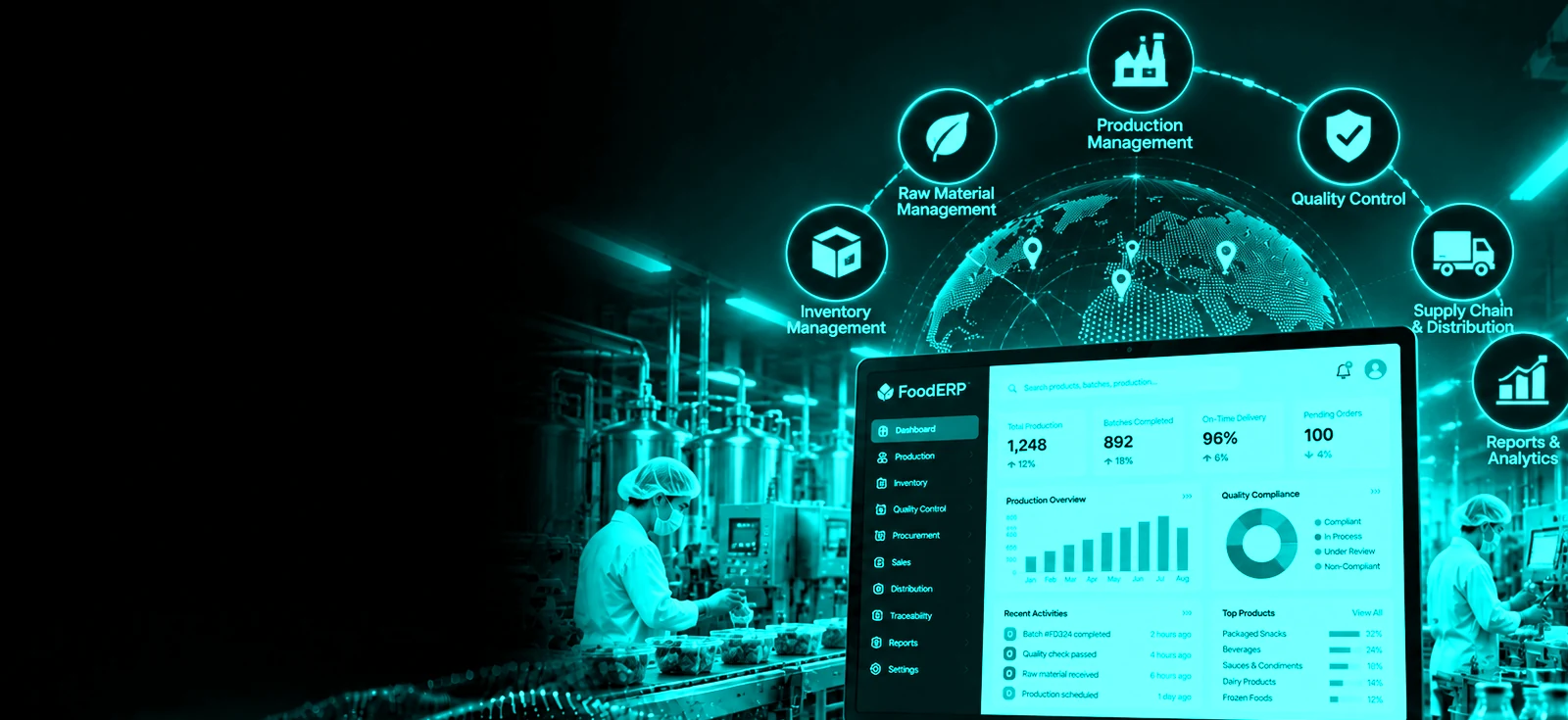
Best ERP for Food Manufacturing
Looking for the Best ERP for Food Manufacturing? Exxalt Core Technology helps food manufacturers manage ingredients, recipes, batches, production, quality, inventory, costing, and finished goods through one connected system.
Build a more organized food production workflow from raw material receipt to finished-product dispatch.
What Should the Best ERP for Food Manufacturing Help You Manage?
Food manufacturing is different from general manufacturing. Ingredients can have batch information, expiry dates, different units of measurement, production recipes, quality requirements, and storage conditions.
Manufacturers need visibility across the complete process—not simply accounting and inventory.
A suitable Food Manufacturing ERP Software should connect raw materials, recipes, production batches, quality checks, finished goods, stock, purchases, sales, and operational costs so teams can manage production with clearer information.
Food Manufacturing ERP Built Around Production Operations
Raw Material & Ingredient Management
Manage ingredients, additives, packaging materials, and other applicable production inputs with relevant stock, purchase, batch, and inventory information.
Recipe & Formula Management
Maintain applicable recipes or product formulas with required ingredients, quantities, units, and other configured production requirements.
Connect recipes with material planning and relevant production activities.
Batch Production Management
Create and maintain production batches with relevant product, recipe, planned quantity, actual production, material usage, and production information.
Production Planning
Plan manufacturing based on relevant product requirements, orders, available materials, production quantities, and configured production processes.
Batch & Lot Tracking
Maintain applicable lot or batch information for raw materials, production, and finished goods to provide structured movement and production records.
Quality Management
Record relevant quality checks for incoming materials, production stages, batches, or finished products based on configured food manufacturing workflows.
Expiry & Shelf-Life Management
Maintain applicable manufacturing, expiry, or shelf-life information against relevant batches and products for better inventory visibility.
Food Inventory Management
Track ingredients, packaging materials, work-in-progress, and finished products across configured stores, production locations, or warehouses.
Purchase & Supplier Management
Manage applicable ingredient and material purchases, suppliers, quantities, costs, batches, and incoming stock information.
Food Production Costing & Reports
Bring relevant material consumption, production quantities, purchases, inventory, expenses, and finished-goods information together to support costing and operational reporting.
Why Food Manufacturers Need More Than Generic ERP
Better Ingredient Visibility
Know relevant ingredient quantities, batch information, stock availability, and material movements across production.
Standardized Recipe Management
Maintain configured product recipes or formulas so production teams can work from structured ingredient requirements.
Better Batch Visibility
Connect relevant materials, production information, quality records, and finished quantities with individual manufacturing batches.
Better Expiry Management
Maintain applicable expiry and shelf-life information so teams can identify relevant stock that requires attention.
Improved Production Control
See what is planned, what is currently being produced, and what has moved into finished inventory.
Better Cost Visibility
Combine relevant ingredient usage, production information, purchases, and operational costs for clearer product and batch cost analysis.
How Food Manufacturing ERP Works
Plan
Define the product, recipe or formula, required quantity, ingredients, and applicable production requirements.
Produce
Issue relevant ingredients and record applicable batch production, consumption, output, and process information.
Check
Perform configured quality activities and maintain relevant batch, expiry, and finished-product information.
Store & Dispatch
Move approved production into finished-goods inventory and process relevant customer orders and dispatch activities.
ERP for Different Food Manufacturing Businesses
Packaged Food Manufacturers
Manage ingredients, recipes, production batches, packaging materials, quality, inventory, and finished products.
Bakery & Confectionery Manufacturers
Organize relevant flour, ingredients, recipes, production quantities, batches, packaging, and finished-goods inventory.
Snacks & Ready-to-Eat Manufacturers
Manage applicable ingredients, formulations, production batches, quality, packaging, inventory, and distribution requirements.
Dairy & Food Processing Businesses
Maintain relevant raw materials, production batches, quality information, inventory, finished products, and applicable expiry information.
Beverage Manufacturers
Manage applicable ingredients, formulas, production batches, packaging materials, quality records, and finished-goods stock.
Multi-Unit Food Manufacturers
Maintain relevant production and inventory information across different factories, production units, stores, or warehouses with centralized management visibility.
Why Consider Exxalt for Food Manufacturing ERP?
Built Around Food Production
Manage food-specific workflows involving ingredients, recipes, batches, production, quality, shelf life, inventory, and finished products.
Ingredient-to-Finished-Goods Visibility
Maintain relevant information as materials move from purchasing and inventory through production and into finished goods.
Configurable Production Workflows
Configure applicable recipes, batch structures, production stages, quality activities, inventory locations, and manufacturing processes around your operation.
Food Manufacturing Process Automation
Reduce repetitive administrative work by simplifying applicable production entries, inventory movements, batch records, material consumption, and reporting.
Multi-Unit Management
Maintain unit-specific production and inventory information while giving management centralized operational visibility.
Support & Customization
Work with Exxalt Core Technology to identify suitable configurations, integrations, and customization requirements for your food manufacturing processes.
Choose an ERP Built for the Way Food Is Manufactured
Your ERP should do more than record business transactions. It should help connect ingredients, recipes, production batches, quality, inventory, expiry information, costing, and finished goods.
Discover whether Exxalt Core Technology is the right Food Manufacturing ERP for your production requirements.
Frequently Asked Questions About Best ERP for Food Manufacturing
What is the best ERP for food manufacturing?
The best ERP depends on the manufacturer's products, production process, batch requirements, inventory structure, quality workflows, number of locations, and reporting needs. A suitable system should support food-specific operations such as ingredients, recipes, batches, production, quality, expiry information, and inventory.
What is Food Manufacturing ERP Software?
Food Manufacturing ERP Software connects relevant production and business processes such as ingredients, recipes, batches, inventory, purchases, quality, production, finished goods, and reporting.
How is Food Manufacturing ERP different from general ERP software?
General ERP software manages common business functions. Food manufacturing ERP needs additional production-focused capabilities such as ingredient management, recipes or formulas, batch production, lot information, quality workflows, shelf-life information, and finished-goods management.
Can recipes and formulas be managed?
Yes. Applicable recipes or formulas can maintain relevant ingredients, quantities, units, and configured production requirements.
Can production be tracked batch-wise?
Yes. Relevant production information can be maintained against individual batches, including applicable materials, quantities, outputs, quality information, and finished products.
Can expiry and shelf-life information be managed?
Yes. Relevant manufacturing, expiry, or shelf-life information can be maintained against applicable products and batches.
Can raw materials and finished goods be managed together?
Yes. The system can maintain applicable ingredients, packaging materials, work-in-progress, and finished-goods inventory through connected inventory workflows.
Can multiple food manufacturing units be managed?
Yes. Multi-unit configurations can maintain relevant factory-specific production and inventory information while providing centralized management visibility.