
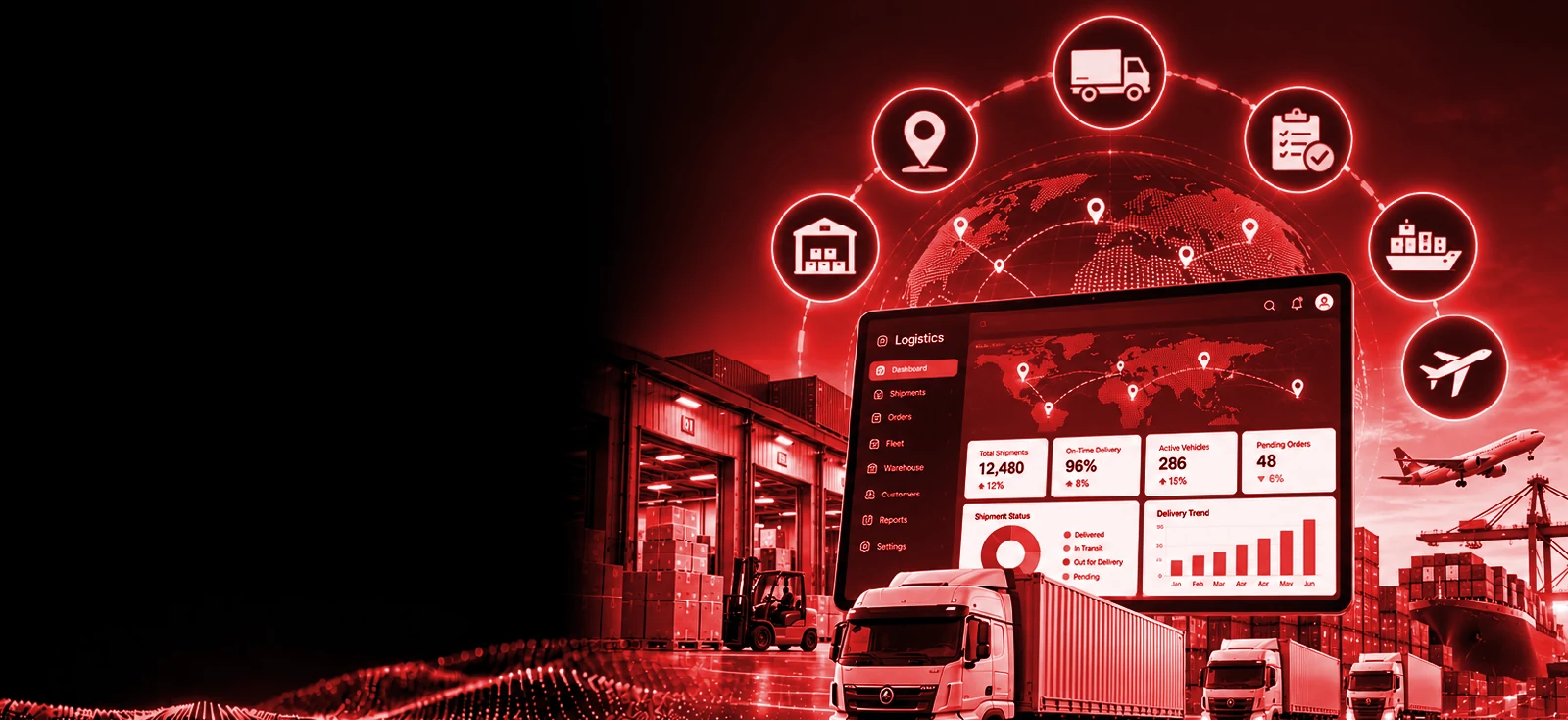
Logistics Management Software
Manage orders, pickups, shipments, dispatch, deliveries, hubs, and logistics operations with Logistics Management Software from Exxalt Core Technology.
Connect the movement of goods from order creation to final delivery with better operational visibility.
From Pickup to Final Delivery — Keep Every Shipment Moving
Logistics operations involve continuous coordination between customers, orders, warehouses, pickup locations, hubs, vehicles, drivers, shipments, and delivery destinations.
When shipment information is spread across calls, spreadsheets, and separate systems, operations teams can struggle to answer important questions: What is ready for pickup? What has been dispatched? Where is the shipment in the workflow? What is still pending?
Logistics Management Software from Exxalt Core Technology brings these activities into one structured system, helping businesses organize shipment movement from pickup through final delivery.
Logistics Management Software Built Around Shipment Operations
Logistics Order Management
Create and manage logistics orders with relevant customer, pickup, destination, shipment, quantity, and operational information.
Pickup Management
Organize scheduled pickups and maintain relevant pickup location, customer, shipment, and assignment information for operations teams.
Shipment Management
Maintain shipment records from creation through delivery. Keep relevant order, package, origin, destination, movement, and status information connected.
Dispatch Management
Organize outgoing shipments and assign applicable vehicles, drivers, routes, or operational resources based on the configured logistics workflow.
Hub & Branch Management
Maintain shipment movement across relevant branches, hubs, distribution centres, or logistics locations while keeping location-level operational records organized.
Shipment Status Management
Update applicable shipment stages as goods progress through the logistics workflow. Give teams clearer visibility into pending, in-process, dispatched, and completed movements.
Delivery Management
Maintain relevant delivery assignments, destination information, delivery status, and completion records within a structured workflow.
Proof of Delivery
Record applicable delivery confirmation information after successful delivery. Maintain relevant proof-of-delivery records against the shipment where configured.
Logistics Cost Management
Record applicable freight, handling, transport, delivery, and other operational costs against relevant shipments or logistics activities.
Logistics Reports & Analytics
Review orders, pickups, shipments, dispatches, deliveries, pending activities, costs, and other logistics information through centralized reports.
Know What Is Moving, What Is Pending, and What Has Been Delivered
Better Shipment Visibility
Maintain a centralized view of relevant shipments and their current operational stage from pickup through delivery.
Organized Pickup Operations
Keep scheduled pickups, locations, shipment information, and relevant assignments together for easier coordination.
Faster Dispatch Coordination
Give operations teams clearer information about shipments ready for dispatch and the resources assigned to move them.
Better Hub Visibility
Maintain relevant shipment movement information as goods pass through branches, hubs, or distribution locations.
Clearer Delivery Status
Keep delivery progress and applicable completion information connected with individual shipments.
Better Logistics Cost Visibility
Maintain relevant transport, handling, freight, and delivery expenses against applicable logistics activities for easier operational review.
How Logistics Management Software Works
Book
Create the logistics order with relevant customer, shipment, pickup, and destination information.
Pick Up
Schedule and manage collection of the shipment from the applicable origin or customer location.
Move
Process the shipment through relevant hubs, branches, dispatch stages, and transportation activities.
Deliver
Complete the final delivery, update the relevant shipment status, and maintain applicable delivery confirmation information.
Logistics Management Software for Different Operations
Logistics Companies
Manage customer orders, pickups, shipments, dispatches, hubs, deliveries, and operational reporting through one connected system.
Courier & Delivery Businesses
Organize applicable parcel or shipment movement from pickup and sorting through dispatch and final delivery.
Distribution Companies
Coordinate relevant goods movement between warehouses, branches, customers, and delivery destinations.
Ecommerce Logistics Operations
Manage applicable order fulfilment logistics from shipment preparation through dispatch and customer delivery.
Third-Party Logistics Operations
Maintain relevant customer, shipment, warehouse, movement, and delivery information based on configured 3PL workflows.
Multi-Branch Logistics Businesses
Manage shipment activity across multiple branches or hubs while giving management centralized operational visibility.
Why Choose Exxalt Core Technology?
Built Around Logistics Operations
Manage actual logistics activities such as orders, pickups, shipments, hubs, dispatch, movement, delivery, and operational costs.
Shipment-Level Visibility
Keep relevant pickup, movement, dispatch, delivery, and status information connected with each shipment.
Configurable Logistics Workflows
Configure applicable shipment stages, hubs, branches, status structures, assignments, and operational processes around your logistics model.
Logistics Process Automation
Reduce repetitive administrative work by simplifying applicable shipment updates, assignments, status changes, operational records, and reporting.
Multi-Hub & Branch Management
Maintain location-specific logistics information while giving management centralized visibility across the network.
Support & Customization
Work with Exxalt Core Technology to identify suitable configurations, integrations, and customization requirements based on your logistics operations.
Connect Every Shipment From Origin to Destination
Bring logistics orders, pickups, shipments, hubs, dispatch, delivery, and operational reporting into one connected logistics management system.
Discover how Exxalt Core Technology Logistics Management Software can help your team coordinate goods movement and maintain clearer visibility across logistics operations.
Frequently Asked Questions About Logistics Management Software
What is Logistics Management Software?
Logistics Management Software is a system used to organize the movement of goods through activities such as logistics orders, pickups, shipments, hubs, dispatch, delivery, status management, costs, and reporting.
What is a Logistics Management System?
A Logistics Management System provides structured workflows for coordinating goods movement from the point of origin through relevant logistics stages to the final destination.
What is the difference between Logistics Management Software and Transport Management Software?
Transport Management Software primarily focuses on vehicles, drivers, trips, fuel, maintenance, and fleet operations. Logistics Management Software has a broader shipment-focused role, covering orders, pickups, hubs, shipment movement, dispatch, and final delivery.
Can shipment status be managed?
Yes. Applicable shipment stages and status information can be maintained as goods progress through the configured logistics workflow.
Can multiple logistics hubs or branches be managed?
Yes. A multi-location configuration can maintain shipment activity across different hubs or branches while providing centralized operational visibility.
Can pickup and delivery operations be managed?
Yes. Relevant pickup and delivery information can be maintained against individual logistics orders or shipments.
Can proof of delivery be maintained?
Where configured and supported, relevant delivery confirmation information can be recorded against completed shipments.
Can Logistics Management Software connect with warehouse operations?
Where configured, logistics workflows can connect with relevant warehouse, inventory, order fulfilment, transport, and broader ERP processes.